· Sustainability · 4 min read
Anchor or Buoy?
What is truly more sustainable? An honest comparison between traditional anchoring and structured buoy fields.
What is truly more sustainable? An honest comparison
For many skippers, anchoring is part of the pure freedom of being on the water. Find a bay, drop the anchor, enjoy the sunset. Independent. Simple. Close to nature.
At the same time, awareness is growing: our seas are sensitive ecosystems. Seagrass meadows, microorganisms, coastal areas - all of them react strongly to mechanical stress.
So the honest question is this: is traditional anchoring really the most sustainable solution? Or are buoy fields, when implemented properly, the gentler long-term option for the environment?
Let us look at both systems.
What actually happens when you anchor?
An anchor does not just hold. It moves.
When it sets, it digs into the seabed. When the boat swings with the wind, the chain drags across the ground. This is where the real problem begins.
Effects on the seabed
- Destruction of seagrass meadows, such as Posidonia
- Sediment being stirred up
- Damage to sensitive habitats
- Slow recovery, sometimes over decades
Seagrass stores CO₂, produces oxygen, and stabilizes coastlines. When it is destroyed, the sea loses one of its most important natural protection systems.
The more frequently a bay is used, the clearer the traces become.
Conclusion: One anchoring maneuver may seem harmless. With high usage, however, the ecological impact adds up significantly.
What does a sustainable buoy do differently?
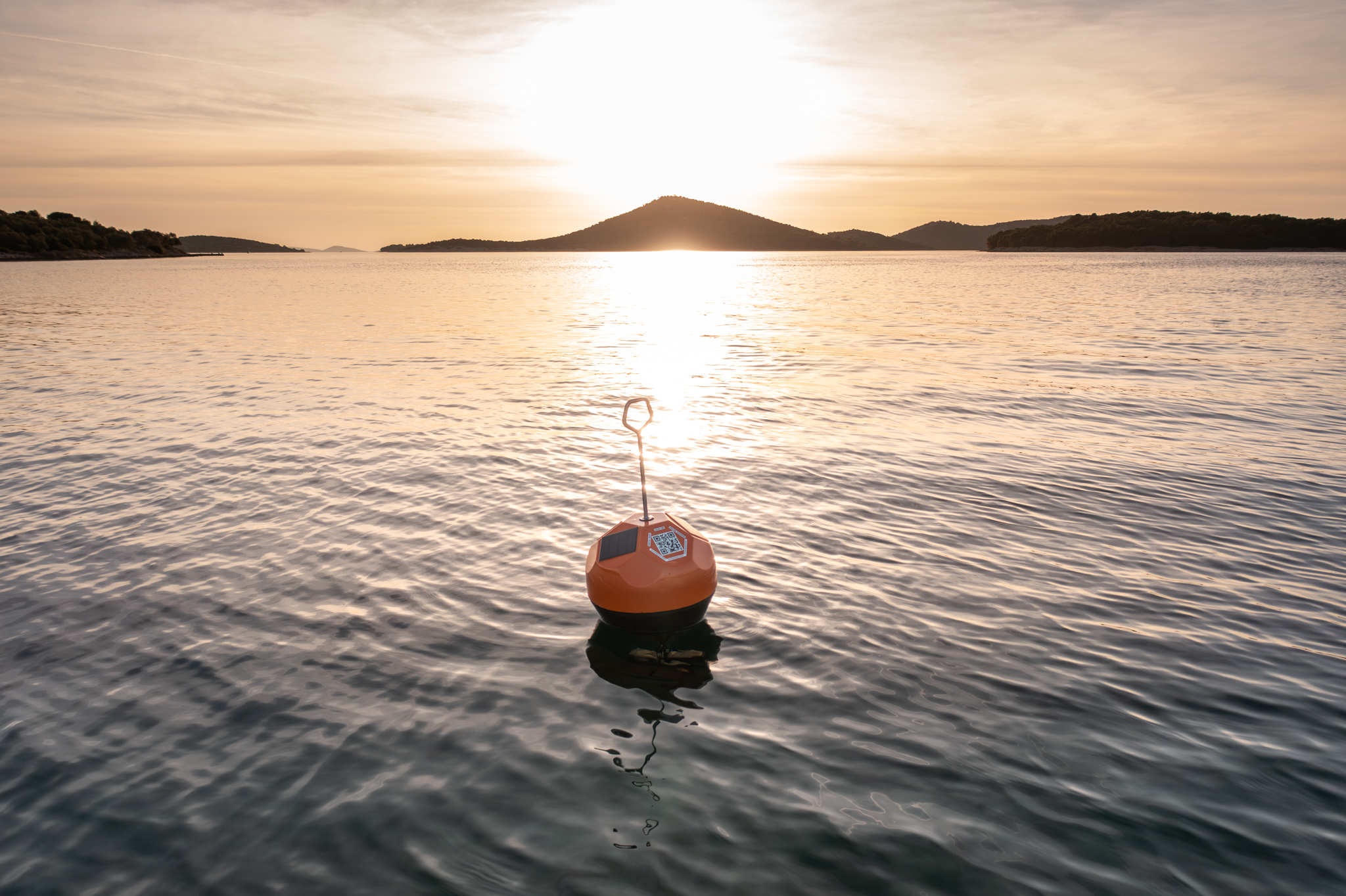
A modern, permanently installed buoy works differently from a freely set anchor.
It is fixed at a defined point, ideally with an environmentally friendly screw or fixing system that affects the seabed as little as possible.
Benefits of a structured buoy system
- No constant chain drag across seagrass
- Clear positioning without uncontrolled swinging
- Protection of sensitive areas
- Control over visitor frequency
Especially in heavily used cruising grounds, a well-planned buoy field can greatly reduce widespread pressure on the seabed.
This is the key difference: anchoring distributes the impact unpredictably. Buoys concentrate it in a structured way.
Sustainability is about more than the seabed
Sustainability is often reduced to ecological footprint alone. Sustainable mooring, however, includes more than that.
1. Materials and service life
High-quality buoys with durable components reduce replacement cycles.
Less material use means less environmental impact.
2. Planning instead of searching
Anyone who has searched through several bays at sunset knows the situation: engine noise, stress, and time pressure.
Plannable mooring reduces:
- unnecessary engine hours
- fuel consumption
- CO₂ emissions
- noise pollution
Digital booking systems indirectly support sustainability because they help avoid search traffic.
3. Protection through transparency
Organized buoy fields come with clear rules.
Distances are maintained. Sensitive zones remain free. Structure creates protection.
Counterargument: Is a buoy not also an intervention in nature?
Yes, it is. Every installation in the sea is an intervention.
The difference lies in scale and control.
Uncontrolled anchoring in heavily visited bays repeatedly damages large areas.
A professionally installed buoy system concentrates the intervention at defined points and protects the rest.
So the question is not “intervention or no intervention”. It is uncontrolled use or intelligent use.
Safety as part of sustainability
Sustainability also means preventing damage.
Poorly set anchors can:
- drag
- damage neighboring boats
- trigger rescue operations
Structured buoy fields increase safety through:
- defined distances
- checked moorings
- clear allocation
Less damage means fewer repairs, lower material consumption, and fewer conflicts in the bay.
Safety and sustainability work together.
So, what is more sustainable?
The honest answer is this: in quiet areas with sandy seabeds, correct anchoring can be acceptable.
But in heavily used areas with sensitive vegetation, structured and sustainable buoy fields are clearly the gentler long-term solution.
The future is not about either-or. It is about conscious decisions.
Smart solutions bring together:
- ecological responsibility
- plannability
- safety
- comfort
This is where modern, sustainable coastal concepts begin.
Rethinking freedom
Freedom on the water now also means responsibility.
Anyone who wants to travel sustainably should decide not only by habit, but by impact.
A well-designed buoy system protects sensitive areas, reduces stress, and makes mooring plannable.
Booking a buoy becomes simple - with real sustainable value.
Together, we can shape a maritime future where safety, comfort, and environmental awareness go hand in hand.
For a lasting positive impact on our seas.